
Microsoft’s Disputed Recall Feature Now Under Public Preview


Microsoft has announced that its Recall feature is now available for public preview. The preview will initially be available to a small group of PCs. Specifically, users with Copilot+ PCs enrolled in the Windows Insider Dev channel.
Although the AI feature debuted earlier, Microsoft delayed its official launch due to privacy concerns. Subsequently, Microsoft encrypted the underlying database for Recall and disabled the feature’s default setting.
“Insiders and Recall users, we want you to know your snapshots are truly yours. We do not send your snapshots off your PC to Microsoft or third parties, and don’t use them for training purposes,” the blog post states.
Moreover, for privacy reasons, Microsoft claims that Recall will be able to detect sensitive information, and won’t save or store those snapshots.
Concerns
“We’ve updated Recall to detect sensitive information like credit card details, passwords, and personal identification numbers. When detected, Recall won’t save or store those snapshots. We’ll continue to improve this functionality, and if you find sensitive information that should be filtered out, for your context, language, or geography, please let us know through Feedback Hub”, it said. The scope of what constitutes “sensitive” data is subjective, and users may not realise the extent to which their activity data is being tracked or stored until it could be too late.
Moreover, it mentions that Microsoft has offered an option that they “encourage users to enable,” which facilitates the anonymous sharing of apps and sites that users wish to exclude from Recall. Additionally, users can choose to exclude specific apps and websites through the Recall settings page.
However, the blog states that “AI can make mistakes”, when fetching results based on user queries, which could lead to inadvertent exposure of private information. AI-based search results are not always accurate, and AI models are known to “hallucinate.” Inaccurate results could reveal private or unintended content, that may be accessed in ways users don’t expect.
If the results are inaccurate or not what the user intended, Microsoft encourages feedback. However, the reliance on users to report errors raises concerns about how these issues are handled. It also raises questions about whether sensitive information is properly safeguarded in the interim.
Background
Earlier this year, Microsoft introduced Copilot+PCs, which allowed users to search and view a timeline of their work across applications, websites, and documents. The Recall feature aimed to take frequent snapshots of the user’s screen to help them find past content. It would analyze the snapshots and offer options to interact with them. The feature aimed to respect privacy by storing snapshots locally and encrypting them. However, concerns arose, especially regarding sensitive data.
The UK’s Information Commissioner’s Office (ICO) also noted that it would be making inquiries into the feature for more information about the safeguards Microsoft has in place to ensure user privacy when using the feature. “We expect organisations to be transparent with users about how their data is being used and only process personal data to the extent that it is necessary to achieve a specific purpose….” it stated.
Microsoft assures that snapshots are not shared with other users or for targeted ads and that users can delete or filter certain content. However, Recall did not hide sensitive data like passwords, and content moderation was not applied, meaning unprotected data could still be stored in snapshots.
Tighter Restrictions
Subsequently, to address privacy concerns about its Recall feature, Microsoft then made changes to ensure user control. Recall became opt-in, disabled by default, and users had to choose to save snapshots. Access required Windows Hello enrollment, with snapshots decrypted only upon user authentication. The search index database was also encrypted. Recall, introduced with Copilot+PCs, captured users’ active screens to help them find content across apps, with snapshots stored locally. However, privacy concerns arose, with some comparing it to spyware, and the UK’s Information Commissioner’s Office (ICO) launching an inquiry. Ethical hacker Alex Hagenah demonstrated a tool that extracted unencrypted Recall data, raising security risks. Microsoft clarified that Recall didn’t capture DRM (digital rights managed) content, and users could pause, delete, or filter snapshots. Moreover, IT admins could disable snapshot saving on work devices, but could not enable it for users.
Read More:
- Microsoft Launches PCs Which Can Recall Everything You Do
- Microsoft introduces privacy settings to its ‘Recall’ feature
- WhatsApp to Launch ‘Chat Memory’ Feature of Meta AI
For You
- Have something to tell us? Leave an Anonymous Tip
- Ask us to File an RTI
- Sponsor a MediaNama Event
- Platform providers must prevent the formation of “information cocoons,” which occur when algorithms push content to a user based entirely on their expressed preferences. Online platforms are prohibited from pushing or recommending homogenous content to users, which may lead to addiction. They cannot force users into choosing interest tags, push harmful or illegal content, or collect personal data beyond what is necessary to promote content.
- Platforms must disclose the algorithmic principles behind search result rankings, improve log retention, and develop techniques to detect and prevent illegal activities like the use of fake or paid accounts to manipulate search result rankings.
- Delivery platforms must prevent overly short delivery times, which can lead to traffic violations, accidents, or late delivery charges. They must publicly disclose the algorithmic rules behind delivery time estimates, cost calculations, and route planning. They must also promptly handle complaints from workers regarding late deliveries, which can be caused by factors such as traffic control, traffic accidents, and bad weather.
- Online platforms must eliminate algorithmic price discrimination by prohibiting differential pricing based on user characteristics, providing clear discount and coupon rules, and offering honest explanations for promotional limitations.
- Platforms must enhance socially responsible algorithms by improving recommendation services for minors and senior citizens. They must also establish content governance capabilities and detect synthetic and illegal content.
- Digital platforms must improve algorithm security, ensure that the algorithm’s training data is legitimate, address vulnerabilities, and conduct regular security assessments.
- Enforce these responsibilities on platforms by mandating regular reviews, audits, and security checks.
- Orient algorithms toward positive social outcomes by cultivating high-quality content pools that promote positive social values.
- Ensure fairness by prohibiting anti-competitive algorithmic practices, and protect workers’ rights by improving algorithms related to order allocation, remuneration, and working hours.
- Transparent and accountable search, sorting, and push algorithms.
- Ensure greater user autonomy by allowing users to turn off algorithmic recommendations and select or deselect their own interests.
- responsible for the procurement and operation of hardware and software of the AIRAWAT facility
- maintenance and upgradation of AIRAWAT including server rack upgrades, software upgrades, facility cooling, etc.”
- First, please read the document: Accessing AIRAWAT-PSAI-Guidance Document.pdf
- If you wish to avail this unique opportunity, kindly fill out the attached form (NPSF-TAS-FORM-V2.4), which aims to collect information about your startup’s specific AI computation resource requirements.
- Once completed, please return the filled & signed form to us here: (https://forms.office.com/r/86Cd9VdPsk. The first deadline for submission of the request form is 23rd June 2023.
- Upon receipt, we will review your submission in conjunction with C-DAC and provide a response detailing the next steps toward accessing these supercomputing facilities.”
- NPSF employs a differential charging policy to the Affiliates from 1) Government R&D and academic institutions, 2) Industries/startups/MSME.
- Charges for any special type of usage or situation not mentioned in this document will be decided on a case-to-case basis by C-DAC.
- Charges will be communicated to prospective users based on their requirements.”
- Is NASSCOM still actively involved in the AIRAWAT project? If yes, what are the current initiatives or programs being undertaken to support AI startups in collaboration with C-DAC or other partners? If not, has the responsibility been transitioned to another organization or entity?
- What specific role does NASSCOM play in the AIRAWAT initiative? Does it extend facilitating access for startups?
- Does NASSCOM play a role in selecting startups for access to AIRAWAT’s supercomputing facilities or managing their onboarding process? If so, what are the criteria and considerations involved in the selection process?
- Once a startup gains access to AIRAWAT, are there any structured guidelines or monitoring mechanisms in place to ensure equitable usage of resources and to prevent misuse?
- Given the lack of a formal grievance redressal mechanism in the Technical Affiliation Scheme, does NASSCOM have any plans to address potential concerns or disputes that startups might face regarding unscheduled extended downtime, resource allocation, consultancy charges, or policy changes?
- AIRAWAT Was non-operational for an extended period, reportedly for 3 months. If so, can you provide insights into the reasons for the downtime and any measures taken to prevent similar disruptions in the future?
- Can you confirm if AIRAWAT was non-operational for an extended period, specifically three months? If so, what caused the downtime?
- Was the downtime total, affecting all users, or limited to specific components like the storage system or certain user services?
- How many users were impacted during this period, and what steps were taken to mitigate the effects on their operations?
- What communication was maintained with users during the reported downtime, particularly regarding system status and resolution timelines?
- Could the claim of three months of downtime be an overestimation, or do internal records align with this timeframe?
- Has AIRAWAT been fully restored to operational status, and are there lingering issues from the reported failures?
- What steps has C-DAC taken to prevent such prolonged disruptions in the future?
- CDNs must only register with the Department of Telecommunications (DoT) instead of undergoing a complex licensing process.
- They must not have any license fees.
- They must localise their data to ensure that sensitive information (especially user data) stays within the country.
- CDN license must have a 10 year validity period.
- They must submit regular compliance reports to TRAI to maintain transparency and must follow national laws, especially regarding data protection and security, ensuring alignment with India’s regulatory standards.
- CDN authorisation must support global interoperability so that the Indian CDNs can integrate seamlessly with global networks to support international content distribution.
I&B Minister Ashwini Vaishnaw Urges Parliamentary Panel to Address Vulgar Content on Social Media

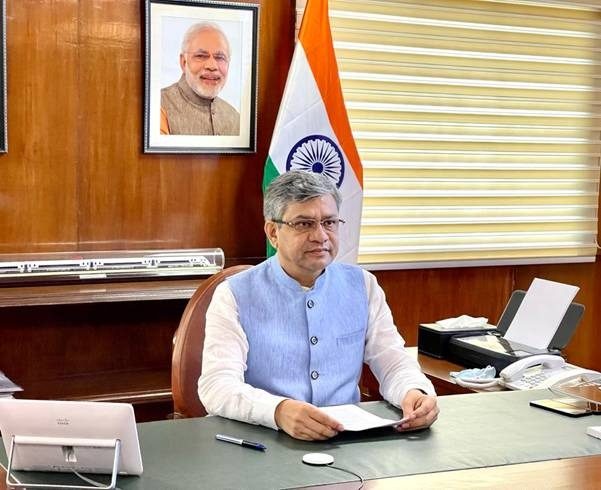
Minister of Information and Broadcasting Ashwini Vaishnaw suggests that the Parliamentary Standing Committee on Communication and Information Technology should take up the issue of vulgar content on social media. “The countries from which these social media platforms hail, their sensitivities and our country’s sensitivities are very different. Such a debate is ongoing in almost every country,” Vaishnaw said, in response to a question raised by Arun Govil, a BJP MP from Meerut during question hour.
“Previously, the press used to have editorial checks on content to decide whether published content was accurate; that check has now ended,” Ashwini Vaishnaw mentioned. He added that as a result of this, today social media is a medium for press freedom, but at the same time, it is also an uncontrolled expression where many types of vulgar content circulate.
Govil enquired about the measures currently in place to prevent the proliferation of immoral and sexual content. He suggested that the laws currently in place are not particularly effective in curbing such content and asked whether the government was considering making the existing laws more stringent or bringing in new laws for such content. “There is definitely a need to make existing laws stricter [to curb vulgar content], and I would request that the parliament come to a consensus about the same,” Vishnaw said.
What is the parliamentary standing committee currently looking at?
Currently within the ambit of the Ministry of Information and Broadcasting (MIB), the parliamentary standing committee is reviewing the implementation of laws related to all forms of media, the emergence of over-the-top (OTT) platforms, and related issues. The committee is also reviewing mechanisms to curb fake news. So far, the committee has summoned the News Broadcasters and Digital Association (NBDA) and the Editors Guild of India (EGI) to discuss ways to curb fake news.
The rising attention to sexual content:
In March, the Ministry of Information and Broadcasting (MIB) blocked 18 over-the-top (OTT, streaming) platforms, including Prime Play, Mojflix, Dreams Films, and MoodX, for publishing obscene content. It also gave orders to get the social media handles (12 Facebook accounts, 17 Instagram handles, 16 X handles, and 12 YouTube channels) associated with these accounts taken down.
Then in June, an NGO called Save Culture Save Bharat Foundation wrote to the MIB and the Ministry of Electronics and Information Technology (MeitY) submitting evidence that X (formerly Twitter) and Netflix have sexually explicit content on the platforms. The NGO argued that this content violates laws like the Prevention of Child Sexual Offence Act (POCSO Act, 2012), the Information Technology Act, 2000, and the Indecent Representation of Women Act.
The foundation urged the government to block these platforms from hosting such content. It suggested that the government should implement a law of ethics code for all audio-visual platforms to set limits on the kind of content they can distribute.
Also read:
UK Court Approves £7 Billion Lawsuit Against Google Over Search Dominance


Last week, the UK’s Competition Appeal Tribunal (CAT) approved the advancement of a £7 billion lawsuit against Google for exploiting its search dominance, despite the tech giant’s objections. However, this lawsuit is one of many calling out the company for anti-trust practices, the Verge reported.
What was the case?
Filed in 2023 by consumer rights advocate Nikki Stopford, the case argues that Google abused its dominant position in the UK’s search engine market, overcharging advertisers and subsequently raising prices for consumers. Additionally, it stipulates that the tech company “forced” phone manufacturers to pre-install apps like Google Search and Google Chrome browser on Android devices. Claims were also made about Google paying Apple “billions” to make Google the default search engine on devices using Apple’s iOS operating system. ‘This UK legal action seeks to promote healthier competition in digital markets and to hold Google accountable,” Stopford said.
The CAT’s ruling follows Google’s September appeal, where its parent company Alphabet urged a London tribunal to dismiss the lawsuit, rejecting claims of consumer harm. Hailing the decision, Stopford called it “a significant victory for UK consumers.” She further claimed that despite Google’s popularity among consumers for being free-of-cost, the service isn’t “genuinely free” owing to concerns over dominance.
In a statement to The Verge, Google responded that it believes the case is “speculative” and “opportunistic.” Further, the tech company added that people preferred Google owing to its helpful attributes rather than because of the lack of alternatives.
Google battles multiple lawsuits
Earlier this month, the United States Department of Justice (DOJ) demanded Google sell the Chrome browser alongside advising behavioural remedies to mitigate Google’s control over the Android ecosystem urging it to favour the tech company’s general search services. In September 2024, the European Court of Justice fined Google £2.4 billion, upholding the European Commission’s verdict on the tech giant for abusing its dominant position and favouring its own shopping service ‘Google Shopping’. Besides this, the tech giant is also facing a lawsuit from Yelp, where it was accused of dominating the local search and search advertising markets through anti-competitive conduct.
Notably, in a recently concluded lawsuit by the DOJ against Google, the US District Court in a “landmark” judgement, found the company guilty of being a monopolist in the Search Market. Numerous reasons like Google maintaining exclusivity through deals and its dominance limiting innovation, were noted.
Impact on advertisers and consumers
During a September 2023 lawsuit, the DOJ alleged that Google engaged in monopolistic behaviour by increasing the prices of ads up for auction without informing advertisers. This practice enabled Google to increase revenues earned from search ads. Moreover, during a previous US lawsuit against Google, it was argued that the monopoly tax imposed by the platform on business advertisers like clothing brands, restaurants, and realtors is ultimately borne by consumers through their access to higher-priced and lower-quality products and services offered by said businesses. “Every American suffers when Google imposes its monopoly pricing on the sale of targeted advertising,” it added. Such monopolistic practices also raise concerns about rivals being forced out of the market, competition being driven down, and possible customer disadvantages.
Also Read:
After India, Japan Investigates Amazon for Anti-trust Violation

Japan’s Fair Trade Commission raided Amazon Japan earlier this week amid doubts that the tech giant was violating anti-monopoly laws, Reuters reported. These probes into Amazon Japan follow India’s investigation into the e-commerce giant violating competition laws. Amazon was under the radar of Japan’s competition regulator for compelling sellers to lower the prices of products to give them “advantageous placement on the site”.
According to reports, Amazon asked retailers to offer competitive prices to be a part of its Buy Box system. This system spotlights products by one seller as the preferred choice on a product page and displays an obvious box reading “Buy Now” enabling shoppers to make instant purchases. Providing sellers with a competitive edge, this system enables them to significantly increase their chances of making a sale by providing customers with a convenient and trusted purchasing option. Additionally, Amazon required sellers to use their in-house services like logistics and payment collection to be eligible for the Buy Box promotion, The Japan Times reported.
Previous probes on Amazon Japan
In 2018, Japan’s fair trade regulator raided the e-commerce company on accusations of demanding suppliers pay for part of the cost incurred from selling their products at a discount on its site, Reuters reported. As per a different probe, Amazon requested that suppliers selling their products on other platforms give them a discount when they list them on Amazon Japan.
Similar scrutiny in India
Earlier this month, India’s Enforcement Directorate (ED) conducted raids at 19 locations across Mumbai, Bengaluru, and New Delhi, targeting sellers associated with Amazon and Flipkart over alleged FDI violations. The Competition Commission of India (CCI) conducted an inquiry in September and discovered that Amazon and Flipkart violated competition laws, which prompted this action. The CCI inspection was based on a complaint filed by a Delhi-based trade body in 2021. The companies were accused of anti-competitive practices like offering deep discounts on products from preferred sellers, preferentially listing these sellers, and creating exclusive tie-ups and private labels.
After the preliminary raids on the sellers, the ED directed their attention to examining whether the relationship between Amazon and Flipkart and their vendors violated FDI norms by allowing said e-commerce companies to exercise control over their vendors, The Economic Times reported. The ED later uncovered ties between the e-commerce platforms and their top sellers, many of whom were former employees or related to past associates of Amazon and Flipkart. These investigations were based on alleged violations of the Foreign Exchange Management Act (FEMA) 1999, which prevents e-commerce entities from exerting control over inventory through sellers.
Trade bodies have also raised several other complaints about the anti-competitive practices of e-commerce companies. Additionally, Minister of Commerce and Industry, Piyush Goyal questioned Amazon’s pricing strategies and practices of selling products through subsidiaries.
Complaints In Other Countries
Besides this, the European Union (EU) is set to investigate Amazon next year over an alleged breach of the Digital Markets Act, which seeks to curb the unchecked power of tech giants, Reuters reported. Within this, the EU will look into Amazon’s alleged favouring of their own brand products on the online marketplace over others.
Also Read:
Video: Who Governs Security Cameras? The Govt Can’t Decide


India’s Communications Ministry and IT Ministry seem to be at odds over regulating security standards for video surveillance devices. The Ministry of Communications focuses on “smart cameras” that transmit footage via telecom networks, while the IT Ministry covers traditional CCTV systems. Both ministries require manufacturers to adopt strict security protocols, but overlapping authority creates regulatory confusion. The Telecom Act of 2023, which grants the Communications Ministry wider cybersecurity powers, clashes with the IT Ministry’s 2024 amendment reaffirming its role in cybersecurity. India’s lack of clear jurisdiction for surveillance devices highlights a growing issue: how to regulate technologies that span multiple domains.
MediaNama’s Kamya Pandey explains the issue here:
Also Read:
China Launches Special Program To Govern Algorithmic Content Feeds And Protect Workers’ Rights

The Cyberspace Administration of China announced a special program to govern algorithmic recommendations, search results ranking, and other aspects of online platforms, including workers’ rights and algorithmic price discrimination. Published on November 24, the notice stated that the special program would continue till February 15 next year, an expansion of the Chinese government’s previous attempts to regulate the online space. The project is a follow-up to 2021’s “Guiding Opinions on Strengthening Overall Governance of Internet Information Service Algorithms.”
What is China covering in the program?
What are the policy’s objectives?
The Cyberspace Administration is the official internet regulator and censor of the Chinese government. According to Stanford University’s DigiChina Centre, the institution enjoys “potential jurisdiction as a supra-ministerial regulator over virtually all state and private sectors touched by nearly ubiquitous online activity.” The regulator had previously launched investigations into Chinese tech giants like WeChat and ride-hailing app Didi.
Also Read:
Data Loss and Downtime: All Is Not Well With Indian IT Ministry’s AI-Focused AIRAWAT Project

“Dear User, this is to inform you that the storage subsystem of the AIRAWAT-PSAI system has experienced multiple simultaneous catastrophic hardware failures,” read an email to startups that were working on India’s AI supercomputer, AIRAWAT, on September 5, 2024.
“The storage OEM is actively working on recovery efforts with their engineering team dedicated to restoring the system and recovering the data. Onsite efforts till now have not culminated into data recovery. Hence it might be required to ship the storage equipment to OEM engineering Lab (onsite),” the email continued. It added that efforts for data recovery are underway.
AIRAWAT is India’s flagship AI platform developed under NITI Aayog. It is a high-performance system intended to provide affordable computing power for AI innovation and research.
MediaNama has reviewed a series of emails from the Centre for Development of Advanced Computing (C-DAC), the research and development organization under the Ministry of Electronics and Information Technology (MEITY). CDAC is responsible for the maintenance of the AIRAWAT system.
What started off as a routine maintenance of AI infrastructure led to a “catastrophic” hardware failure. This resulted in the subsequent loss of data from AI programs that startups had stored in AIRAWAT. These emails were corroborated by two startup founders that are working on AIRAWAT but declined to be identified.
25+ Startups but No Publicly Accessible Record
In January 2024, CDAC announced that over 25 AI startups had been onboarded to use the AIRAWAT infrastructure. However, no publicly accessible record of these startups or their names has been made available. Currently, CDAC is planning to further expand its AIRAWAT ambition, as indicated by the call for applications put out on November 25, 2024. These maintenance failures raise several questions regarding the safeguards and protections for AI startups working on the AI platform. Moreover, there are governance concerns about how startups are selected to work on AIRAWAT projects.
What is AIRAWAT?
AIRAWAT intends to offer crucial resources for startups and research institutions that rely on GPU power for intensive AI tasks. It was presented as a boon to those who do not have the money or resources to set-up their in-house AI training in India.
In 2023, the Cabinet chaired by Prime Minister Narendra Modi approved a comprehensive national-level IndiaAI mission. The financial outlay for this was Rs 10,371.92 crore. Modi’s vision for AI is “Making AI in India and Making AI Work for India.”
Subsequently, NITI Aayog, the government think tank, put forward AIRAWAT. The system and its accompanying infrastructure were to be built at the cost of Rs 7,500 over a 3 year period to advance Artificial Intelligence in India, reported Economic Times. AIRAWAT was reported as “An AWS-Like Platform To Help Startups Achieve Breakthroughs In AI.”
The approach paper by NITI Aayog details how the system was intended to function.
The system was proposed to support multi-tenant, multi-user computing with resource partitioning. The AIRAWAT architecture was intended to include resource partitioning and provisioning. Moreover, it intended to offer a multi-layer storage system to ingest and process multi-petabytes of big data.
The usage of AIRAWAT was outlined as encompassing a wide range of applications. It ranged from Big Data Analytics to specialised AI solutions across various domains. These included healthcare, agriculture, weather forecasting, among others. Additionally, it also included security and surveillance, financial inclusion (fraud detection), and infrastructure tools.
What went wrong: A timeline of events
The CDAC first issued an alert message on July 15, 2024, regarding a technical issue that led to the emergency maintenance of the AIRAWAT-PSAI system. The alert described the situation as follows: “We regret to inform you that due to a storage component failure, the AIRAWAT-PSAI system at NPSF [National PARAM Supercomputing Facility] is in emergency maintenance mode. As a result, access to the system, job submission, and data transfer is currently disabled.”
Subsequently, a second email came on July 26, 2024. “We are writing to provide you with an update regarding the ongoing downtime of the AIRAWAT-PSAI system due to failure of storage components. The OEM [Original Equipment Manufacturer] is currently sourcing the replacements for the failed components from the US, and we expect their arrival next week. We are actively working to restore the system as soon as possible,” it stated.
The next update came on August 29, 2024, more than a month later. It stated: “In reference to the previous mail, We will be able to communicate some concrete updates regarding the system early next week.”
Then, on September 5, 2024, another update came in stating that the “system has experienced multiple simultaneous catastrophic hardware failures.”
“The storage OEM is actively working on recovery efforts with their engineering team dedicated to restoring the system and recovering the data. Onsite efforts till now have not culminated into data recovery. Hence it might be required to ship the storage equipment to OEM engineering Lab (onsite),” it further added.
“It is unlikely that the data can be recovered from the failed components”
An update dated October 9, 2024, followed up on the above email. It stated that data was lost and could not be retrieved.
“Following up on the email below regarding storage failure, we would like to inform you that the Storage OEM engineering team from across Australia, UK, US has made extensive efforts to retrieve the data from the failed components over past months. However, unfortunately, these attempts have not been successful.
It has been indicated to us by Storage OEM that it is unlikely that the data can be recovered from the failed components.”
Loss of Data and Infrastructure Failure
For startups relying on AIRAWAT’s GPU and storage resources, the infrastructure failure has been a severe setback.
“Had they said that the data recovery will not happen, or had they given a time of three months, then we would’ve moved out, right? Like, if you tell me that your shop is shutting down for the next three months, then I’ll obviously, as a consumer, go and find some other shop,” said an AI startup founder who requested anonymity and was using AIRAWAT’s infrastructure. “But if you keep telling me that it’s been delayed by a week and I’ll update you next week, then I am in a difficult position,” he added.
When asked about any prior warnings or indications regarding the system shutting down, he stated that there were none whatsoever. He explained that he relied on this system for his daily operations. Moreover, he explained that there were no alternative solutions or backups in place. “The way you use these systems is very dependent on the infra[structure]. So that means even if you were to migrate to some other system, that is not an easy job, because there’s a lot of data that’s in place,” he said.
He lost more than 10 terabytes (TB) of data due to the system failure. While he exchanged emails with AIRAWAT’s support, communication was infrequent and updates were sparse.
“They were only communicating when somebody was asking them to,” he said.
Accessible but not Usable
An update on September 11, 2024, from CDAC said that the system had become accessible.
“This is to inform you that the AIRAWAT-PSAI system is now available for use, with an upgraded environment. The details of the upgrades are outlined in the attached document. In reference to below e-mail, an intermediate storage solution (total capacity of 435 TB) has been commissioned and is now available as the home area storage. Due to the limited capacity, a storage quota of 1 TB per project has been allocated,” the email from CDAC said.
Despite the official announcement, the system remained unusable for several weeks. The founder explained while the system was “accessible” according to the update, it wasn’t functioning in a way that met user needs. “According to them, it was functional on September 11, but for us, it became accessible after a few weeks,” he told MediaNama. “There was no upfront communication because at the end of the day, we can’t shift blame to someone else. But it was very tricky at the time. It [system] wasn’t available for me to manage client’s expectations. We were in a very tough spot, then,” he added.
To manage reliance on the non-operational AIRAWAT system, the startup took emergency steps to mitigate future disruptions. They had to create a backup to ensure their operations could continue uninterrupted, even if AIRAWAT fails again. Eventually, he had to purchase their own ‘on-prem’ system. On-prem refers to private data centres that companies house in their own facilities and maintain themselves.
20 lakh expense we didn’t account for: AI startup founder
“As an early-stage startup, we had to purchase our own on-premises system, because we couldn’t rely on platforms like AIRAWAT and needed a form of hedging. This was a 20 lakh worth system. An expense that we didn’t account for, and completely unplanned. This decision was made during the 3-4 months when AIRAWAT was non-operational,” he said.
He stated that the lost data was entirely under AIRAWAT. Therefore, CDAC held ultimate responsibility for data safety.
Multiple attempts were made to get a comment from C-DAC regarding the “catastrophic” failure of AIRAWAT’s infrastructure and the loss of data. Rishi Pathak, joint director of CDAC, declined to comment when contacted by MediaNama.
However, the source of the infrastructure failures can perhaps be traced to the procurement process for the AIRAWAT system.
Who’s Fault is it Anyway?
NITI Aayog’s approach paper stated that “the development of this facility would primarily require engagement with a System Integrator, with demonstrated capability in setting up large computing facilities specialized for AI, who would design and implement the entire technology stack for the facility, and bring on board the suitable vendors for each layer of the stack.
“The responsibility of upgrading and maintaining the facility on an ongoing basis will also be entrusted with the System Integrator with necessary skillset and experience. The operation and maintenance of the facility needs to be structured in a manner that creates sufficient incentive to leverage existing infrastructure.” It further stated that the System Integrator would be chosen through an open tendering process.
Deployment vs. Maintenance
The manufacturing and initial deployment of AIRAWAT’s High Performance Computing (HPC) was carried out by Netweb Technologies a year ago.
Two employees at the company talked to MediaNama on conditions of anonymity.
One employee stated that their role ended after the initial setup. “We deployed it last year. We are not vendors anymore. We manufacture and deploy. What is currently happening there is not our concern,” they said
However, when asked if NetWeb Technologies was aware that AIRAWAT systems weren’t working properly, another employee disagreed. He stated that it wasn’t true.
“AIRAWAT is India’s fastest super computer. All IIT research institutes have been working on it since last year. There is some misunderstanding here,” they said.
“We are responsible for maintaining and taking care of the AIRAWAT system until the warranty period ends, as part of the Annual Maintenance Contract (AMC),” they added.
They asserted that AIRAWAT shuts down only for maintenance, testing, or upgradation. Alternatively, it may be blocked for other activities. However, they agreed that for this year, Netweb is responsible for the maintenance.
The approach paper outlined that administration of the AIRAWAT facility “will be a joint effort of the System Integrator and the Host Institute, with the following division of responsibilities:
System Integrator:
There seems to be a certain level of misalignment between the responsibilities of the System Integrator and the operational readiness of the AIRAWAT facility, further deepened by Netweb Technologies seemingly distancing itself from ongoing issues, despite being responsible for maintenance during the warranty period under the AMC.
This disconnect was further exacerbated by the gap between deployment and infrastructure failures. This sculpts the need for reliable maintenance protocols within India’s AI ecosystem.
NASSCOM’s ‘Evangelistic’ Reachouts
Both the AI startup founders that MediaNama spoke to found out about AIRAWAT through NASSCOM (The National Association of Software and Service Companies). NASSCOM is a non-governmental trade association and advocacy group that represents the Indian technology industry. NASSCOM was actively promoting AIRAWAT to AI startups, encouraging them to leverage the system’s capabilities.
In April 2023, the Telangana Government, in collaboration with the C-DAC, facilitated by the Telangana AI Mission (T-AIM), launched a partnership. This was aimed at providing AI startups with exceptional access to advanced AI computational resources. This initiative aimed to support startups associated with T-AIM and powered by NASSCOM.
“Startups will leverage C-DAC’s cutting-edge supercomputing facilities, bridging the gap between innovative AI concepts and their practical application, empowering groundbreaking exploration and innovation,” it stated.
This partnership was part of broader efforts by NASSCOM and C-DAC to promote AIRAWAT.
“NASSCOM was doing some sort of evangelism for AIRAWAT. That is how I got to know about it in the first place,” stated the first AI start-up founder.
NASSCOM Email Overview
NASSCOM’s introductory email to AI startups on June 13, 2023, outlined the opportunity to access AIRAWAT’s supercomputing resources. It stated:
“As part of our sustained mission to empower AI-focused startups, we are pleased to share an exciting opportunity for your organization.
Many of you know that we have partnered with the Centre for Development of Advanced Computing (C-DAC) in Pune to provide Revv Up startups with privileged, exclusive access to their AI-specific supercomputing facilities. This access is unprecedented, and you’ll be the first set of startups that will lay hands on the fastest supercomputing facility in India.
These state-of-the-art supercomputing infrastructure houses powerful AI computational resources that can significantly speed up your AI development and research processes. Leveraging these facilities can pave the way for rapid data processing, enhanced computational capabilities, and a platform to push the boundaries of your AI applications. Importantly, they come with free access for 6 months or 1000 GPU hours or whichever gets fulfilled first.
Technical Affiliation Scheme: a case of missing grievance redressal
The NPSF form mentioned above details the ‘Technical Affiliation Scheme’ for AI startups to join the system. It further states that “NPSF reserves the right to amend the Technical Affiliation Scheme fully or partially at any time. However, the Affiliates will be informed of any such changes. C-DAC also reserves the right to withdraw the scheme at any given time without giving any reasons thereof.”
The form fails to mention any grievance redressal mechanism for AI startups. However, it states that “NPSF’s technical staff members having long experience in high performance computing are available for consultancy on working days to Technical Affiliates on terms as mentioned in this booklet.”
What is defined as ‘Consultancy’?
Consultancy is outlined as such:
“Consultation of C-DAC members towards usage of NPSF and on the specific user problem will be available at no cost to the user up to the initial one working day or equivalent. If an Affiliate requires consultancy of C-DAC members beyond this, separate charges will be applicable and these will be charged per support call on a case-to-case basis.
Note:
The term ‘consultancy’ in the context of the form does not imply a grievance redressal mechanism. In this case, the consultancy services described in the form are primarily focused on providing technical assistance to the affiliates. It specifically focuses on how to use the NPSF system and solve user problems related to high-performance computing. The form does not mention such a mechanism, meaning there is no explicit reference to a formal complaint handling process. It also lacks details on appeals or legal recourse if an affiliate feels aggrieved by the system, charges, or actions under the Technical Affiliation Scheme.
Reliance Amid Frustration
“This is the risk [that] as a user, all the data I process or transfer ultimately relies on hardware that can die within your infrastructure,” stated the AI start-up founder.
However, he noted that they are currently using the system again, as its affordability overpowers the costs of alternative solutions.
“At this point in time, this is the only system that I have,” he stated. “There is a lot of pomp and show around AI and AI startups in India, but this was a complete infrastructure failure on their part. Especially for an elite institution like CDAC. How do I even function as an AI startup?” he questioned.
When reached out, many startups remained hesitant to talk against CDAC, as they are heavily reliant on these systems. Another AI startup founder, on conditions of anonymity, said,“This was a tough time for us. We didn’t intend to rely on it for super long, but as a startup, the rates they were offering, and are still offering, are too good to pass up.”
He further added, “It’s already so difficult to operate as a startup; any help we can get is too important to overlook.” When asked if he has been frustrated with the state of things for three months, he said, “Of course I am, but I simply can’t just move out and move on.”
Queries for NASSCOM
We have reached out to NASSCOM for a response to these questions. We will update the story if/when we receive a response from them.
Queries for CDAC
We have reached out to CDAC for a response on these questions. We will update the story if/when we receive a response from them.
Read More:
Should CDNs be Licensed? Jio’s Stance Differs from Airtel, Vodafone Idea

Airtel wants the Telecom Regulatory Authority of India (TRAI) to instruct content delivery networks (CDNs) to set up infrastructure in tier 2 and tier 3 cities in the country based on criteria such as quantum of traffic. CDNs are a geographically distributed network of servers that cache content closer to users. Caching content closer to users allows companies like Netflix or Amazon Prime to reduce latency, which is the time taken for their data to get to the customer.
Airtel’s comments come in the context of the TRAI consultation on network authorisation under the Telecommunication Act, 2023. TRAI had come out with recommendations seeking CDN regulation back in 2022. These recommendations mentioned that CDN providers must ensure that interconnectivity between them and telcos does not affect the overall quality of service (QoS) of networks. Airtel references the regulator’s 2022 recommendations and says that the authority should meet minimum QoS standards. “This is extremely important considering the huge amount of internet traffic that CDNs are carrying nowadays,” the company argues. Further, the company also suggests that the government should issue content blocking orders CDNs where online platforms cache content, instead of telcos.
The clashing positions on CDN authorisation:
This isn’t the first time Airtel has made such suggestions. It made similar comments in response to TRAI’s consultation on service authorisation in July. Just like then, even now, Vodafone Idea (Vi) agrees with the CDN authorisation requirement. However, the other major telco, Reliance Jio, doesn’t. “We believe that Content Delivery Networks (CDN) are basically auxiliary to telecom services and do not perform any telecom activity as such and should be kept out of authorization framework,” Jio says in its submission.
Jio emphasises that the aim of the Telecom Act is to “simplify regulatory oversight” and it strays away from the idea of overregulation. Another key point that Jio highlights is that when an activity is market-driven, and only helps facilitate a licensed activity (rather than being the licensed activity itself), there is no reason to regulate it. The company says that CDNs are emerging services that anyways work with licensed service providers and as such, TRAI should permit them to organically grow and flourish in interest of ease of doing business. It adds that TRAI should keep observing matters for any market failure and be prepared to step in as and when required, however, “now is not the time”.
The clash between the companies becomes evident when one looks at the submission from the telecom industry body Cellular Operators Association of India (COAI) of which all three telcos are members. Instead of submitting any position about the issue of CDN authorisation, COAI just said that its members will respond individually.
[Note: You can read the telecom companies’ previous perspective on CDN authorisation here.]
Key arguments from Airtel and Vi:
Support for TRAI’s 2022 recommendations:
Vi highlights the following points from TRAI’s 2022 CDN-related recommendations that it supports—
Mandate that large OTTs set up CDNs:
Vi suggests that the regulator should mandate that large content providers and over the top platforms (OTTs) should set up CDNs under specific regulatory conditions, especially for regions where they have high user traffic. Further, TRAI should also instruct content providers with significant demand to cache their content closer to their user base to reduce latency and improve user experience. It argues that CDN service providers should make efforts to create a decentralised CDN network both for improved user experience and to reduce congestion on telecom networks.
No need to govern commercial arrangements between telcos and CDNs:
While Airtel urges TRAI to regulate CDNs in other aspects, both it and Vi believe that the regulator should leave the commercial arrangements between telcos and CDNs to market forces. Airtel says that CDNs help both content providers (by ensuring that their customers have high quality content) and telcos (improve customer experience and save bandwidth). Given these benefits for both parties, the company argues that it makes sense to leave these arrangements unregulated.
Airtel calls back to TRAI’s 2022 recommendations which had instructed CDNs to submit copies of any agreements it enters into with a telco with the regulator within 15 days. “Airtel proposes that while the Authority may require submission of copies of agreements, the terms and conditions should be left to market forces and mutual agreements between parties,” the company mentions.
Data sharing requirements for CDNs to protect market competition:
Vi suggests that the CDNs should implement data sharing transparency guidelines. These guidelines will require CDNs to provide clear information on data flow and interconnection with telecom companies and ISPs. This, it says, will help address monopolistic practices (if any) and ensure fair competition.
Airtel, on the other hand, argues in favor of TRAI’s 2022 recommendation that CDNs should engage with companies and users in a non-discriminatory manner. It says that there is no need for the regulator to carry out any other interventions.
Ensure redundancy for critical sectors:
Vi argues that TRAI must mandate minimum redundancy and disaster recovery requirements for CDN points of presence (POP). For context, POPs are geographical locations where a group of CDN edge servers reside. It must do so, especially for those CDNs that support critical sectors like finance, healthcare, and e-governance.
Operational guidelines for CDNs:
The regulator can consider coming out with operational guidelines for how CDNs engage with ISPs for efficient bandwidth utilisation, Vi says. TRAI can incentivise CDNs (like Cloudflare) to route their traffic through regional Internet exchange points (IXPs) instead of routing data internationally. “NIXI (National Internet Exchange of India) has regional IXPs that CDN operators like Cloudflare or Fastly could leverage for better content delivery within India,” the company suggests. It adds that routing through Indian IXPs will help optimise bandwidth and reduce data costs.
Further, the company mentions that all major telcos have vast POPs and data centers which they could optimise to host CDN infrastructure more efficiently and at scale.
Data security requirements:
In case sensitive data is passing through a CDN, there is a need for robust security measures, Vi says. As such, the regulator could consider implementing mandatory encryption standards and quarterly security audits, especially for CDNs handling sensitive data.
Also read:
India’s Competition Regulator Approves Google’s Minority Stake In Flipkart

The Competition Commission of India has approved Google’s purchase of a “minority, non-controlling” stake in Flipkart India, revealed a press release on November 26. The shares will be bought by Shoreline International Holdings LLC, a wholly-owned subsidiary of Alphabet, Google’s parent company. The transaction also involves a commercial agreement between an affiliate of Shoreline and a subsidiary of Flipkart to provide additional cloud services.
The CCI stated that the deal involved only an “extremely small and non-controlling acquisition,” with both parties acting independently after the transaction. As such, the commission did not feel the need to define or assess the impact on any relevant markets. If the CCI did in fact choose to assess the competitive effects of this agreement, it would focus only on the relevant market, i.e. the market for cloud services in India.
Background:
The approval comes six months after Flipkart announced the addition of Google as a minority investor, who reportedly invested nearly $350 million in the company. Back then, the company stated that the deal would be subject to regulatory approvals. Flipkart’s CCO Rajneesh Kumar had also announced a collaboration between the e-commerce giant and Google Cloud.
At the same time, Flipkart is facing regulatory scrutiny. Just this month, the Enforcement Directorate (ED) raided its offices over alleged violations of Foreign Direct Investment (FDI) rules. Multiple trader bodies accused Flipkart and Amazon of circumventing FDI regulations that prohibit them from selling directly to consumers.
The CCI had also previously found both Amazon and Flipkart to be guilty of violating competition laws by preferencing their own sellers over others. The commission found that both companies displayed their preferred sellers higher in search results, while other sellers became mere “database entries.”
Also Read:


0 Comments